Expert Tips for Designing Your Dream Garden on the Gold Coast
Your Garden Dream is Achievable
Picture this: you step outside on a warm Gold Coast morning into a garden that makes your heart feel full. Vibrant flowers nodding in the breeze, established trees providing dappled shade, the hum of bees and birds, and pathways that draw you deeper into this peaceful oasis you've created. That's the dream, right? And the beauty is, with the right approach and a bit of expertise, it's genuinely achievable. The Gold Coast's incredible climate and the sheer variety of plants that thrive here mean you've got endless possibilities for building something truly special.
Why the Gold Coast is a Gardener's Paradise
Let's be honest, not everywhere can grow what we grow here. Our subtropical climate means you can have lush tropical plants, temperate natives, and just about everything in between all thriving in the same garden. You've got good rainfall in summer, plenty of sunshine, and a growing season that runs through much of the year. That's gold for gardeners. But with all those possibilities comes the responsibility to choose wisely and design thoughtfully.
Starting with Vision and Purpose
Before you dive in with a spade, spend time thinking about what you actually want. Is this garden meant to be a peaceful retreat where you can escape the busy-ness of life? A vibrant entertainment space where friends and family gather? A productive kitchen garden? A showcase of beautiful plants? A low-maintenance scheme where plants basically look after themselves? Your vision shapes every decision that follows. A dream garden isn't just beautiful, it actually serves your life. It works with your climate, fits your lifestyle, and becomes a space you can't wait to spend time in.
Understanding Your Unique Site
Every garden is unique. Before you plant a single thing, get to know your space. Spend time observing how the sun moves across your garden throughout the day and across seasons. That sunny corner in winter might be scorching in summer. A shaded area might get dappled light by afternoon. Understanding light is fundamental to plant selection. Good gardens start with good soil. Take time to understand yours. Is it sandy and quick-draining? Heavy clay that holds water? Rich and friable? The texture, colour, and organisms in your soil tell you a lot about what'll grow well. Improving soil with organic matter benefits almost every garden. Observe where water flows in your garden. Does it pool anywhere? Rush downhill? Disappear too quickly? Understanding water movement helps you make smart decisions about plantings and systems. The Gold Coast can have interesting microclimates. A position against a north-facing wall might be significantly warmer than an open area. Coastal properties might experience salt exposure. These factors influence plant choices.
Building the Framework
Feature trees become the backbone of your garden. On the Gold Coast, consider Jacaranda (stunning purple flowers and elegant structure), Crepe Myrtle (year-round interest with gorgeous summer flowers), Fig Trees (establish quickly, provide shade, and look magnificent), Brush Box (gorgeous native with attractive peeling bark), or Bangalow Palm (creates tropical atmosphere and wildlife habitat). Feature trees should be positioned with purpose. They create focal points, provide shade, frame views, and establish the garden's character.
Create depth by thinking in layers: a tall layer of trees and large shrubs for height and screening, a mid layer of shrubs that provide structure and form, a low layer of ground covers, small shrubs, and flowers for detail and colour, and a base layer of groundcovers and mulch that prevent weeds and retain moisture. This layering creates visual richness and makes the garden feel more substantial.
Hardscaping and Plant Selection
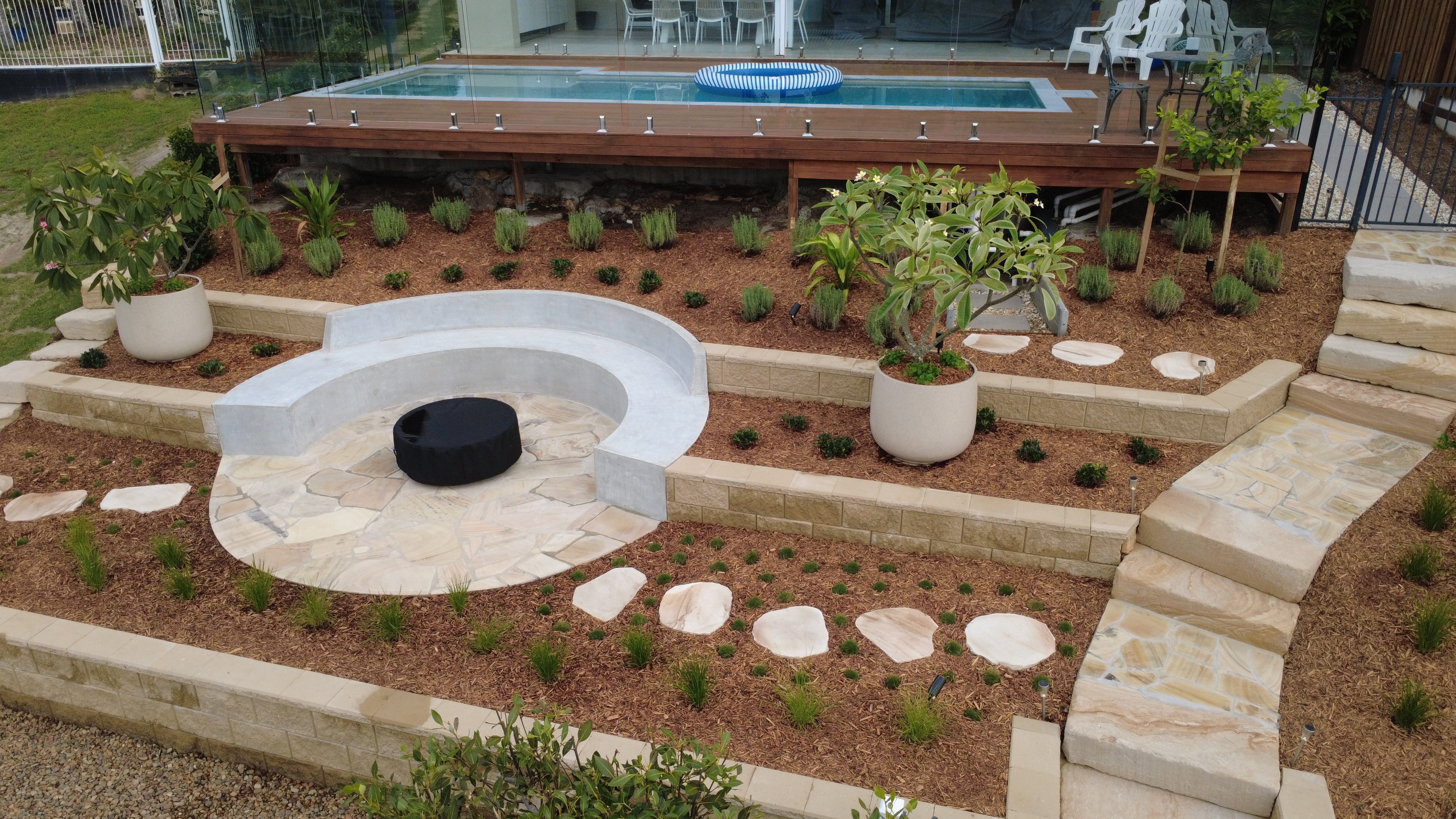
Paths, patios, and structural elements create the bones of your garden. Pathways guide movement and exploration, consider materials that suit your style. Seating areas create places where you actually sit and enjoy your garden. Screening with plants and structures creates privacy and defines zones. A small fountain or pond adds movement and sound. This is where it gets fun. You've got such an incredible palette of plants available. Native beauties like Lilly Pilly, Tuckeroo, Crepe Myrtle, and Brisbane Box all thrive and attract native birds. Tropical performers like Monstera, Strelitzia (Bird of Paradise), Anthurium, and various ferns create lush, exotic atmosphere. Reliable flowerers like Azaleas, Camellias, Hydrangeas, Rhododendrons, and Dahlias all produce stunning displays in our climate. Textural elements like ornamental grasses (Lomandra, Carex, and various feathery varieties) add movement and visual interest.
Colour Principles and Design Unity
Choose plants that give you something different each season. Autumn colour, spring flowers, winter texture, variety keeps your garden interesting year-round. Harmonious colour combinations blend colours that sit near each other on the colour wheel (purples and blues, reds and oranges). Complementary combinations combine opposite colours for striking contrast (purple and yellow, blue and orange). Monochromatic designs use varying shades of the same colour for sophistication. Using the same plant species in multiple locations creates unity and makes the garden feel intentional. Don't scatter everything singly, groups of three or more create impact. Plants should be appropriately sized for their space. A tiny shrub in a large area looks lost; an oversized tree cramps a small garden. Think about mature size, not planting size.
Practical Tips for Success
You don't need to plant everything at once. Start with a manageable area, get it established, then expand. This is less overwhelming and lets you learn what works. Work compost and organic matter into your soil before planting. Healthy soil creates healthy plants. Invest time here, it pays dividends. Establish systems that suit your plants. Drip irrigation for garden beds, sprinklers for lawns, mulch to retain moisture. Efficient watering is especially important in Australian gardens. Choose plants suitable for your climate and be prepared to maintain them appropriately. Mulching, pruning, and deadheading aren't time wasters, they're what keep gardens beautiful.
Remember, mate, a garden is never finished. It's a living, evolving space that changes with the seasons and grows more beautiful with time. Young plants establish and fill out, trees develop character and structure, and you learn what works and what doesn't. That's part of the joy.
Creating a dream garden requires vision, knowledge, and expertise. Getting professional guidance means you avoid expensive mistakes and accelerate the journey to something truly beautiful. At Apunga Landscapes, we live and breathe this stuff. We understand Gold Coast conditions, we know which plants'll thrive, and we're genuinely passionate about creating gardens that transform how you live. Whether you're starting from scratch or refining an existing space, let's chat about your vision and make it real. That dream garden is waiting, let's get to work, mate.
How do I plan outdoor lighting for a Gold Coast garden?
Lighting transforms a space and makes it usable after sunset. Uplighting trees creates drama, path lights ensure safety, and accent lights highlight features. Solar options are budget-friendly and easy. We design lighting to be functional and beautiful, not overly bright or harsh.
What is the best way to create privacy in a Gold Coast garden?
Layered planting with screening plants at different heights works beautifully. Bamboo screens, architectural plants like palms, and fast-growing climbers on trellis are all smart options. A combination of planting and hardscaping (screens, walls) creates effective privacy without feeling fortress-like.
How do I incorporate native plants into a modern garden design?
Native plants can be incredibly stylish—think ornamental grasses, architectural palms, and flowering shrubs like grevillea in contemporary settings. It's about how you arrange and present them, not the plants themselves. Modern + native = fresh and authentic.
What are the most popular garden styles on the Gold Coast right now?
Contemporary minimalist with native accents is big, along with soft tropical vibes. Mediterranean is timeless. Cottage gardens are making a comeback too. The trend is moving toward sustainable, low-maintenance designs that work with our climate.