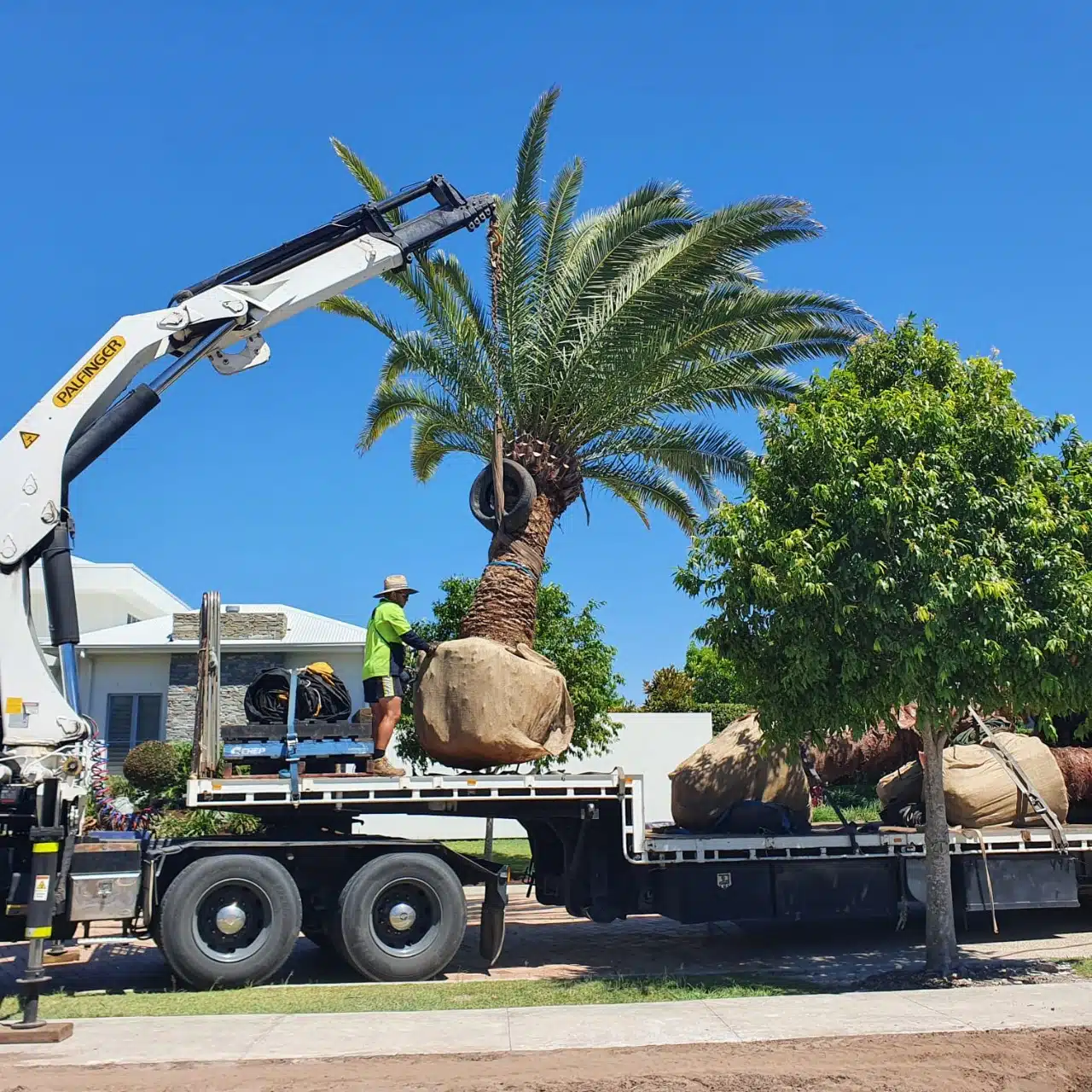
Ex Ground Tree Transplanting
There's something truly special about giving a mature tree a new home. Recently, we transplanted a beautiful Canary Island Date Palm and relocated it to a project in Sanctuary Cove. Now, I'll be honest with you: transplanting ex-ground specimens is not a job you can rush through. It takes planning, patience, and a genuine respect for what you're moving.
The Challenge
When we first scoped this palm, it was pretty clear we had our work cut out for us. The trunk measured a clean 2.5 metres in height, and the crown spread out to about 6 metres across - absolutely stunning proportions. But here's the thing: the existing site soil was a real mixed bag. We're talking shale, clay, and rock - the kind of heavy, compacted ground that makes roots want to give up before they even start.
Getting the Soil Right
Before we even touched that root ball, we dug down to assess exactly what we were dealing with. The root ball itself was 1.1 metres deep, so we excavated down to 1.4 metres with plenty of width to give ourselves a proper working room. This is crucial.. You can't skimp on the excavation, roots need space to establish.
Here's where the real magic happens: we carefully extracted the best of the existing site soil and mixed it with our organic compost blend. This creates a beautiful transition between the existing conditions and what the palm actually needs. We brought that level back up to 1.1 metres with this improved mix, then backfilled the whole cavity with premium organic soil. The idea here is to avoid shocking the young roots with soil that's too rich. It sounds backwards, I know, but young roots actually prefer a gentler transition.
Fertilising and Watering Strategy
We kept the fertiliser approach measured and sensible, a touch of dynamic lifter combined with an osmocote blend gave the palm what it needed without overdoing it. Here's the secret weapon though: water crystals. In our Gold Coast climate, these little beauties hold moisture around the root zone and release it gradually as temperatures spike. It was a hot morning when we finished planting, so we made sure to water that root ball immediately and then left it on a gentle drip for a full 24 hours. The soil needs to settle and make proper contact with the root system.
One technique I absolutely swear by is drenching the crown and root ball with Seasol using a hose click applicator. Palms, especially date palms, actually absorb water through their crown, not just their roots. So we aimed that applicator overhead, letting the Seasol coat the entire crown. It sounds simple, but it makes a genuine difference in establishment.
The Follow-Up Care
Once everything was in place, we installed an automatic irrigation system to keep conditions steady as the palm got its bearings in the new site. That consistent moisture in the establishment period is absolutely vital. Without it, even the best planting job can fall short.
The payoff? This beautiful palm is now thriving. Its root system is establishing beautifully, the crown is lush, and it's become a real focal point in the Sanctuary Cove project. That's the beauty of doing transplanting properly, you get to witness this amazing recovery and watch the tree settle into its new home with confidence.
The key to making transplanting work is understanding that you're not just moving wood and leaves, you're moving a living system. Those roots are working hard to feed the tree, and they need respect and care. Whether it's a native Queensland fig or an elegant frangipani, every tree has its own personality and requirements. That's why we treat each transplant like a bespoke operation, because your tree deserves that level of care.
Now, one question we get asked all the time is whether transplanting is worth the effort and cost. The honest answer? Absolutely. Mature trees give you instant character and shade that you just can't fake with a young specimen, you're looking at years of growth difference. The real kicker is that if you're relocating or redesigning your landscape, moving an established tree saves you time and creates an immediate impact. It's the difference between having a backyard and having a destination.
Whether you're thinking about moving a specimen tree on your Gold Coast property or you want to add a mature tree to an existing space, get in touch with Apunga Landscapes. We've got the expertise to do it right, and we love seeing plants flourish in their new homes.
How long does it take for a transplanted tree to establish itself?
Give it at least 12 months to settle in, but realistically, most trees take 2–3 years to fully recover from the shock and develop a robust new root system. That's why ongoing care in those first few years is crucial—proper watering and a bit of love go a long way.
Can all trees be transplanted, or only certain species?
Most trees can be transplanted with the right approach, but some adapt better than others. Native trees like figs and palms handle relocation well, while some dense evergreens can struggle. We'll always assess your specific tree and let you know what's realistic.
What is the best time of year to transplant a tree in Southeast Queensland?
Spring and autumn are your golden windows—the soil is warm enough for root growth but the weather isn't extreme. We try to avoid the peak heat of summer and the cold snaps of winter, though established trees can handle transplanting year-round if they're managed properly.